Texas Holdem River Meaning
- Texas Holdem River Meaning Urban Dictionary
- Texas Holdem River Meaning List
- River
- Texas Holdem River Means
“I had to call… I was pot committed!”
One of the more commonly uttered justifications for suspect decisions in poker is for players to claim they were “pot committed” in a hand when in they really weren’t. It’s a concept many think they understand, but sometimes they misapply it or are mistaken. But it’s one well worth learning, particularly when playing “big bet” games like no-limit hold’em and pot-limit Omaha in which bets on successive streets can quickly transform a small skirmish into major melee.

The Point of No Return
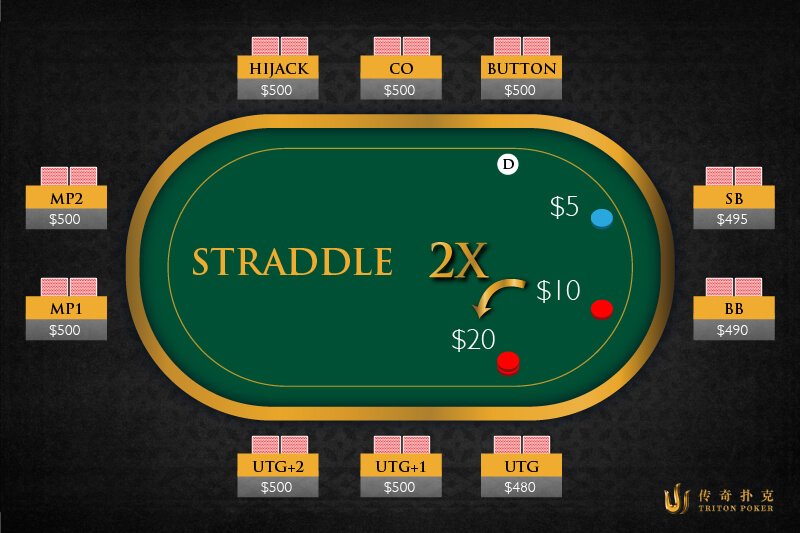
Generally speaking, being pot committed means having arrived at a point in a poker hand at which folding to any bet or raise has become an incorrect play. Such a situation is determined by pot odds and how those odds compare to your chances of winning a hand.
It isn’t exactly the same, but being pot committed is sometimes likened to reaching a kind of “point of no return” such as might arise other contexts. Take the situation of opposing factions building toward conflict who make declarations suggesting a particular action or advancement necessarily removes peaceful alternatives. For example, when Julius Caesar led a legion southward toward Rome and crossed the Rubicon river, that action signaled an inexorable commitment to war, with the phrase “crossing the Rubicon” later coming to represent just such a commitment.
Texas Hold-em, betting after the turn had commenced, then the dealer accidentally flipped the river card before the final player acted. What is the proper procedure to remedy the situation (by rule, if possible)? Oct 07, 2017 Originally the flop was called the turn and the turn was simply known as 4th street. It’s said that the term flop came into existence due to the sound the dealer makes when he “flops” the first three community cards on the table.
Military strategists have long discussed the “Rubicon” example and the mindset it represents, in particular the way committing to such an action necessarily reduces options going forward, including the one to avoid conflict altogether. A possible consequence of such thinking can be false rationalizations to support the decision after the fact — that is, after crossing the “Rubicon” (or some other “point of no return”) to avoid considering alternatives thereafter that might still exist but have been ruled out by the earlier-declared commitment.
In poker, players sometimes mistakenly describe themselves as having been “pot committed” as a justification for going all the way with a hand when they didn’t actually have to do so. Betting chips early in a hand sometimes makes it more difficult for some players to fold later on and concede losing those chips they’ve bet. Thus any bet or raise or call they make becomes justification for committing to battle for a pot to the very end... even if their opponent has assembled a much stronger “army” against them.
But just as in military strategy, it is generally not desirable in poker to seek situations in which you lessen your available options. Players in tournaments prefer amassing big stacks precisely because of the flexibility it gives them when playing hands, whereas those with short stacks find their options reduced. The same goes for cash games, in which those with bigger stacks can be more creative than those with less. One shouldn’t, then, actively look to become pot committed unless the situation is favorable for doing so — e.g., when holding a strong hand that rates to be better than an opponent’s, or when facing pot odds that make committing the rest of one’s stack correct.
A Math Problem in Which All Options Have Been Subtracted Away But One
To describe an extreme example, say you lose a big hand early in a full ring (nine-handed) no-limit hold’em tournament that knocks you back to just 1,000 chips at a time when the blinds are 400/800 with a 100 ante. Making matters worse, on the following hand you are in the big blind, meaning you only have 100 left after posting the ante and big blind. A player in middle position then raises and all fold around.
The action is on you. And you hold .
Here is an obvious example of being pot committed. The blinds and antes total 2,100, and after your opponent raises you have but 100 left to call, making the effective stacks between the two of you just 100. That means you are facing calling 100 to win a pot of 2,200 — that’s pot odds of 22-to-1.
Even if your opponent holds and has an 88.3% chance of beating you (according to the PokerNews Odds Calculator), that’s still just over a 7-to-1 advantage. In other words, mathematically speaking, you’re “priced in” to call no matter what two cards your opponent has. You are, as they say, pot committed.
Of course, you don’t have to call. The option to fold is still available to you, even if doing so would be foolhardy given how that would leave you even less likely to recover. But since you genuinely are pot committed, you should.
That’s a simple and relatively rare example, though. More often your decisions will be less cut-and-dry, although understanding how to calculate pot odds and thus determine whether or not committing your last chips is mathematically correct will help a great deal when making them.
Having Committed Chips ≠ Being Pot Committed
Do note, however, that being pot committed has to do with pot odds and how they compare to your chances of winning, not with how much of your stack you have already committed in pursuit of winning a pot. In the above example, you are not pot committed because you have already committed 900 chips (the big blind and ante) and have but 100 left. You are pot committed because of the pot odds being offered to you and your chances of winning the hand with .
It is a common mistake to consider committing a high percentage of chips in one’s stack already as causing one to be pot committed and thus without options when it comes to deciding what to do with the rest. Those two circumstances often coincide, but you shouldn’t believe yourself obligated to put the last of your stack in just because you have already bet a certain amount before.
Again to fashion a somewhat obvious example, let’s say I play a hand recklessly and keep calling an opponent’s bets all of the way down to the river as I crazily chase a straight draw. I start the hand with 1,000 chips holding and call an opponent’s raise to 200. The flop comes and I call another bet of 300. The turn is the , my opponent bets 400, and I call again, leaving myself just 100 chips. Then the river brings the and my opponent bets one more time, enough to put me all in.
I’ve played the hand miserably, spewing 900 chips from my starting stack of 1,000 chasing that straight. But calling the last 100 here would be even worse. I’m not pot committed because of the chips I’ve already bet. I might be pot committed if I thought my chance of winning the hand if I called were better than the approximately 20-to-1 pot odds I was facing — but with just five-high, I don’t.
Sometimes we do want to be pot committed, say in a tournament in which we are down to a short stack and finally get dealt a premium hand like or . Then we want to get all of our chips in the middle, and thus might bet in a way that increases the likelihood we’ll be getting the remainder of our stack in sooner than later.
But generally speaking, unless you know you are getting favorable pot odds given the hand you hold and it’s chances of being best, being pot committed isn’t desirable. You want to have the option to fold available to you, especially in a tournament when doing so enables you to continue.
Get all the latest PokerNews updates on your social media outlets. Follow us on Twitter and find us on both Facebook and Google+!
Tags
cash game strategytournament strategypot oddsno-limit hold'em
Nothing seems to confuse new Texas hold 'em players more than the blinds. Let's sort it out.
Texas Holdem River Meaning Urban Dictionary
I used to play stud and draw poker with neighbors. I don't still play, but like to read about poker strategy. Would you please explain how the big blind and little blind work in hold 'em? I'm sure many of us who read LuckyDog have no idea. — Dale H., Kankakee, Ill.
Well, Dale, since I had the same question this month from John, a co-worker of mine in Moline, Ill., it's a good time to explain the blinds in hold 'em.
Think of the blinds as antes used to stimulate betting and initiate play. There's one key difference: Unlike stud and draw poker, in which every player must pay the same pre-determined ante before each deal, in hold 'em only the first two players to the left of the dealer position have to post a blind.
The dealer for each hand is designated by a round disk called a button. Except for the first betting round, the player with the dealer button gets to act last throughout the hand. On the first betting round, the two players in the blinds act after the button, then are first to act on remaining betting rounds.
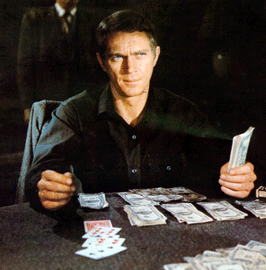
The button moves clockwise one position for each new hand. That rotates the advantage of last action and assures that for every circuit of the button around the table, each player will pay the two blinds once. The little blind usually is half the amount of the big blind.
Here's an example:
Texas Holdem River Meaning List
You're in seat five of a nine-handed $4-$8 limit hold 'em cash game and the dealer button reaches seat three. That means you are in the big blind position and must put $4 in front of you before the cards are dealt. The player to your right in seat four must post the $2 small blind.
Two down cards are then dealt to each player, starting with the small blind. On the first betting round, action starts with the player to your left in seat six, a position called 'under the gun,' meaning first to act.
From the big blind, you are last to act before the flop. If no one has raised (to $8 in this case) when the action gets back around to you, you have two options — you can check, since you're already in for the $4 bet, or you can raise to $8. Don't fold. Even a lousy 7-2 offsuit can turn into quads on a perfect flop!
River
If someone raises before the action gets back to you pre-flop, you have three options: fold and forfeit your $4; call the additional $4, or re-raise by betting $8 more for a total of $12.
After the flop, the betting rotation changes. The player in the small blind on your right acts first for the rest of the hand, then you. If he has folded, you're first to act each round until the hand ends.
On the next hand, the button moves to seat four. Now you're in the small blind position and must post $2 before the deal. To stay in the hand, you must match the bet amount when it's your turn ($2 more if no one raises). Or you can fold, losing your $2 small blind.
On the next hand, you get the dealer button and can see your starting hands for free until it's time to post the blinds again.
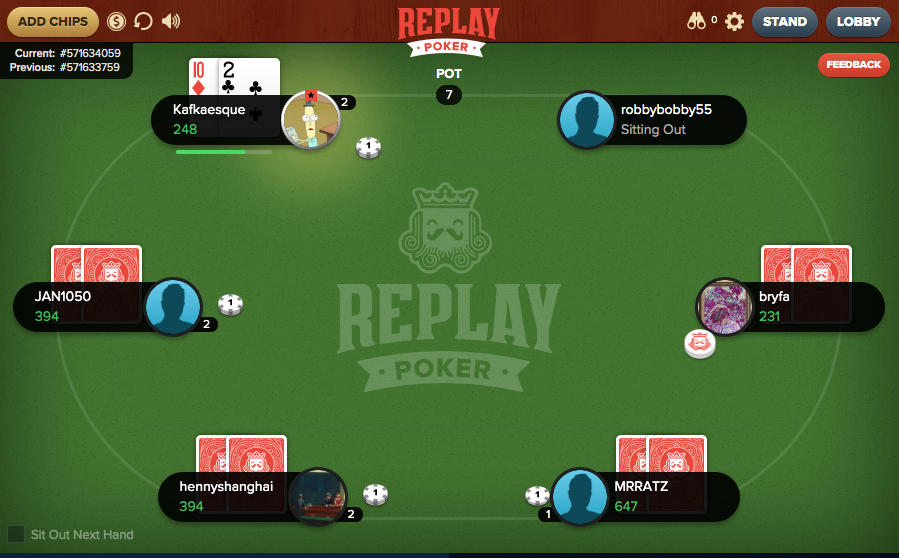
We'll tackle playing strategies from the blind positions in a future column, Dale and John, but for now here are some other things to know:
— Some card rooms play hold 'em with a 'dead' button. That means the big blind is posted by the seated player due for it, and the small blind and button are positioned accordingly, whether or not players actually are seated there to receive a hand. This gives last-action advantage to a player on consecutive hands.
— If you miss paying one or both blinds, you must post the appropriate amount when you return or sit out until the big blind position advances to you. If you post mid-circuit, you still must pay the blinds when they reach you a few hands later in that round.
— When joining a game in progress, some card rooms require that you post the big blind amount if you want to be dealt in right away. You can choose to sit out until the big blind position reaches you normally, which is a good option because you can watch a few hands risk-free and get a feel for the table's action.
— In heads-up play using two blinds, the small blind is on the button. That player acts first before the flop and last on each subsequent betting round.
Texas Holdem River Means
E-mail your poker questions and comments to [email protected] for use in future columns. To find out more about Russ Scott and read previous LuckyDog Poker columns, visit www.creators.com or www.luckydogpoker.com.